Communication at the 3rd Global Soil Biodiversity Conference
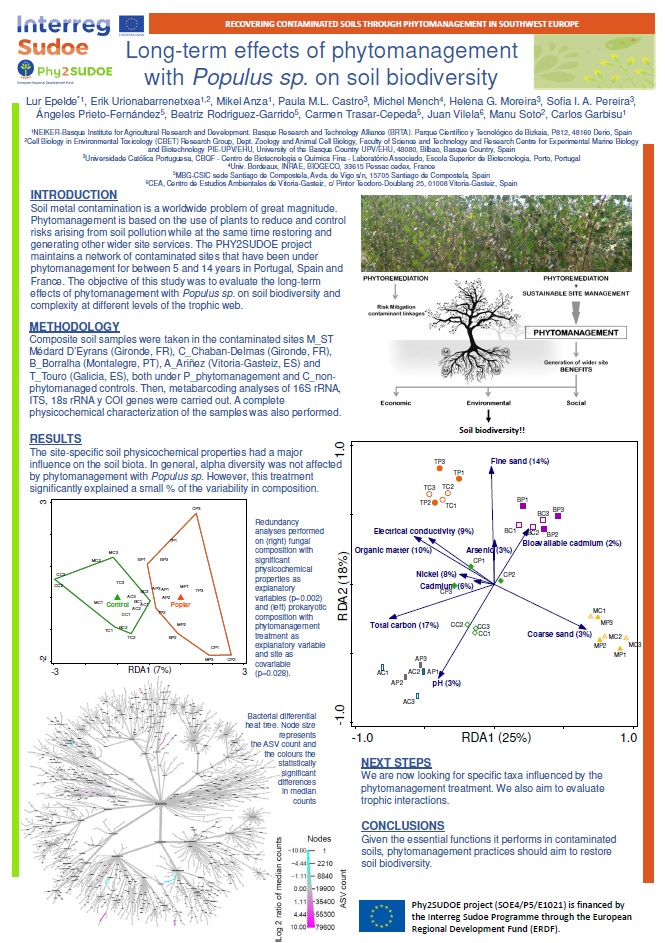
Soil metal contamination is a worldwide problem of great magnitude. Phytomanagement is based on the use of plants to reduce and control risks arising from soil pollution while at the same time restoring and generating other wider site services. The PHY2SUDOE project maintains a network of contaminated sites that have been under phytomanagement for many years in Portugal, Spain, and France. The aim of this study was to evaluate the long-term effects of phytomanagement with Populus sp. on soil biodiversity and complexity at different levels of the trophic web.Composite soil samples were taken in the contaminated sites ST Médard D’Eyrans (Gironde, FR), Chaban-Delmas (Girode, FR), Borralha (Montalegre, PT), Ariñez (Vitoria-Gasteiz, ES), and Touro (Galicia, ES), both under phytomanagement and non-phytomanaged controls. Then, metabarcoding analyses of 16SrRNA, ITS, 18S rRNA and COI genes were carried out.The diversity, composition and complexity of the soil prokaryotic, fungal, and invertebrate communities were affected by the long-term phytomanagement practices. Site-specific soil characteristics also had a significant influence on the edaphic biota.Given the essential functions it performs in contaminated soils, phytomanagement practices should aim to restore soil biodiversity.Global Soil Biodiversity Initiative: https://gsb2023.org/
It is increasingly recognized that soils provide multiple benefits to people, the environment and the economy, and that healthy soils are fundamental for achieving them....
We participated in the XIV Congress on Environmental Health (Zaragoza, Spain, 21-23 June 2017), invited by the Spanish Society of Environmental Safety. In the Session...