Authors: Fernando Ruiz-Torrubia, Carlos Garbisu, Lur Epelde
Journal: Data in Brief
DOI: https://doi.org/10.1016/j.dib.2025.112358
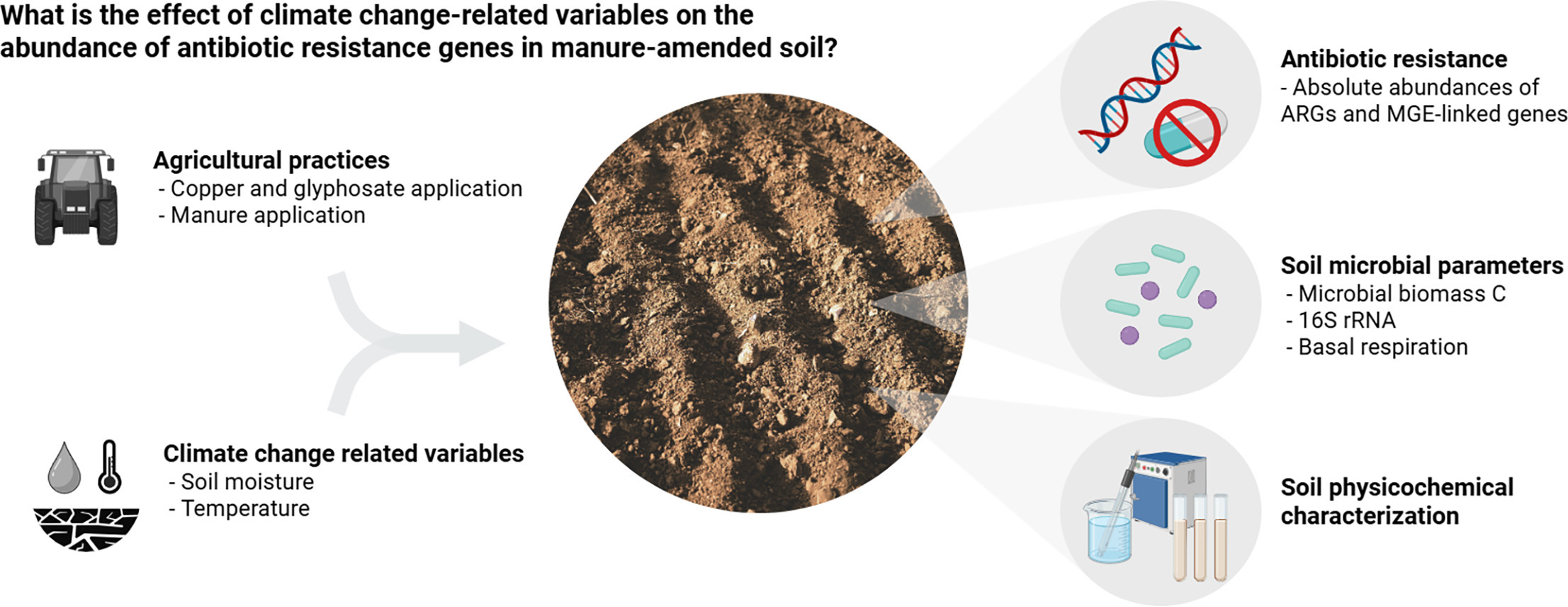
Read more: Data on the effect of climate change-related variables on the abundance of antibiotic resistance genes in a manure-amended soilThis article presents a dataset of antibiotic resistance gene abundances obtained when exposing soil, previously amended with oxytetracycline-spiked cow manure, to different temperatures and moisture contents as two highly relevant climate change-related variables. The absolute abundances of six antibiotic resistance genes (ARGs) and two mobile genetic element (MGE)-linked genes were determined by droplet-digital PCR. Data on soil microbial biomass carbon, the total abundance of the 16S rRNA gene, and basal respiration are also included to show the effect of the climate change-related variables on the biomass and activity of soil microbial communities. The dataset presented in this article contains raw observations (including the soil´s physicochemical characterization), as well as analysis-derived data, on the effects of climate change-related variables on the risk of antibiotic resistance occurrence and spread in soils amended with animal manure, a topic of the utmost importance given the potential links between the environmental resistome and the human resistome. The data provided in this article are of much interest to researchers dealing with the potential impact of agricultural practices (i.e., organic fertilization) on antibiotic resistance under the current scenario of climate change.This article presents a dataset of antibiotic resistance gene abundances obtained when exposing soil, previously amended with oxytetracycline-spiked cow manure, to different temperatures and moisture contents as two highly relevant climate change-related variables. The absolute abundances of six antibiotic resistance genes (ARGs) and two mobile genetic element (MGE)-linked genes were determined by droplet-digital PCR. Data on soil microbial biomass carbon, the total abundance of the 16S rRNA gene, and basal respiration are also included to show the effect of the climate change-related variables on the biomass and activity of soil microbial communities. The dataset presented in this article contains raw observations (including the soil´s physicochemical characterization), as well as analysis-derived data, on the effects of climate change-related variables on the risk of antibiotic resistance occurrence and spread in soils amended with animal manure, a topic of the utmost importance given the potential links between the environmental resistome and the human resistome. The data provided in this article are of much interest to researchers dealing with the potential impact of agricultural practices (i.e., organic fertilization) on antibiotic resistance under the current scenario of climate change.