Authors: Fernando Ruiz-Torrubia, Carlos Garbisu, María T. Gómez Sagasti, Unai Artetxe, José M. Becerril, Lur Epelde
Journal: Scientific Reports
DOI: https://doi.org/10.1038/s41598-026-38389-8
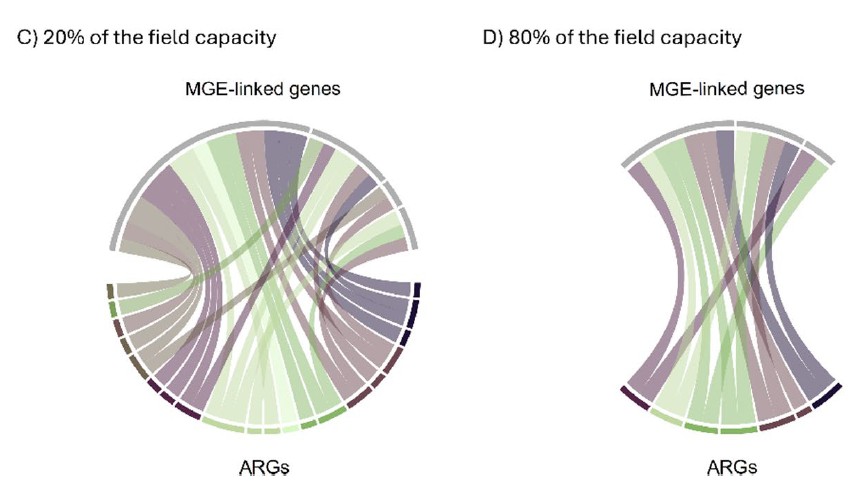
Read more: Impacts of drought and manure fertilization on soil and radish resistomesAntibiotic resistance is a growing global problem, with agricultural practices and climate change as substantial contributors to the spread of antibiotic resistance genes (ARGs) in the environment. We investigated the effect of drought and fertilization type (organic vs. mineral) on radish crop growth and soil prokaryotic communities, with special emphasis on the radish and soil resistomes, as measured by the relative abundance of ARGs and mobile genetic element (MGE)-linked genes. Manure fertilization significantly increased ARG relative abundances in soil, compared to mineral fertilization. Drought and the presence of radish plants emerged as key variables regulating the association between ARGs and MGE-linked genes. Nonetheless, despite radish being a belowground crop, no direct connection was observed between the soil and crop resistomes. These results suggest that soil moisture and fertilization strategies do not necessarily increase the risk of ARG transfer to human pathogens through crop consumption. Consequently, a robust risk assessment of the environmental resistome must account for all compartments within the transmission chain. Together, our findings highlight the complex interplay between agricultural practices and climatic factors in shaping the soil and crop resistome.