Authors: Fernando Ruiz-Torrubia, Carlos Garbisu, Mikel Anza, José Luis Lavín, Lur Epelde
Journal: Applied Soil Ecology
DOI: https://doi.org/10.1016/j.apsoil.2026.106843
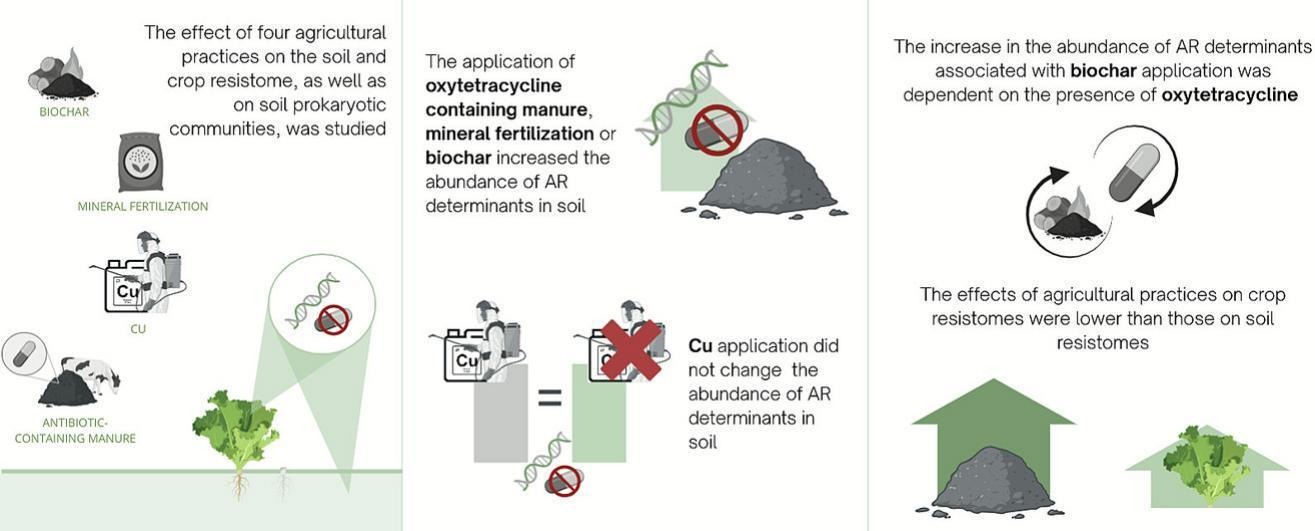
Read more: Oxytetracycline-containing manure and mineral fertilization increase the abundance of antibiotic resistance genes in lettuce-grown soilAgricultural practices can be main drivers of antibiotic resistomes in agroecosystems. The application of manure-based fertilizers, the use of biocides, and the entry of heavy metals to agricultural soils associated with fungicide and/or manure application can all influence the prevalence and dissemination of antibiotic resistance genes (ARGs) in agricultural settings. Alternative soil amendments, such as biochar, have been proposed for the mitigation of antibiotic resistance in agriculture. Here, we investigated the effects of the following treatments, individually and in combination, on soil and lettuce resistomes: (i) mineral (NPK) vs. organic (aged cow manure, non-spiked or spiked with two doses of oxytetracycline) fertilization; (ii) copper application; and (iii) biochar application. We assessed their impact on soil physicochemical and microbial properties, including prokaryotic community composition, as well as the relative abundances of ARGs and MGE-linked genes in soil and lettuce plants. The application of mineral fertilizer, oxytetracycline-spiked manure, and biochar increased the abundance of ARGs and MGE-linked genes in soil by 2- to 16-fold, along with increases in some prokaryotic families linked to ARG-harboring MGEs. In contrast, copper application reduced soil microbial activity but did not affect the soil resistome. Our findings underscore the importance of evaluating the impact of agricultural practices on soil and crop resistomes, with fertilization emerging as the practice with the greatest impact under the conditions of this study. Such assessments are critical for proposing management strategies (e.g., pre-treatment of manure-based amendments) aimed at mitigating the transfer of ARGs to potential bacterial human pathogens.