Authors: Lur Epelde, Ninon Delcourt, Jérôme Cortet, Anders Lanzén, Carlos Garbisu, José Luis Lavín, Luigi P. D’Acqui, Sara Di Lonardo, Martina Grattacaso, Eliana L. Tassi, Fatima-Zahraa El Balghiti, Leila Benidire, Ali Boularbah, Ángeles Prieto-Fernández, Carmen Trasar-Cepeda, Sihem Soufi, Mohamed Allani, Taoufik Bettaieb, Ali Sahli, Ana S.S. Sousa, Sofia Pereira
Journal: Soil Biology and Biochemistry
DOI: https://doi.org/10.1016/j.soilbio.2026.110284
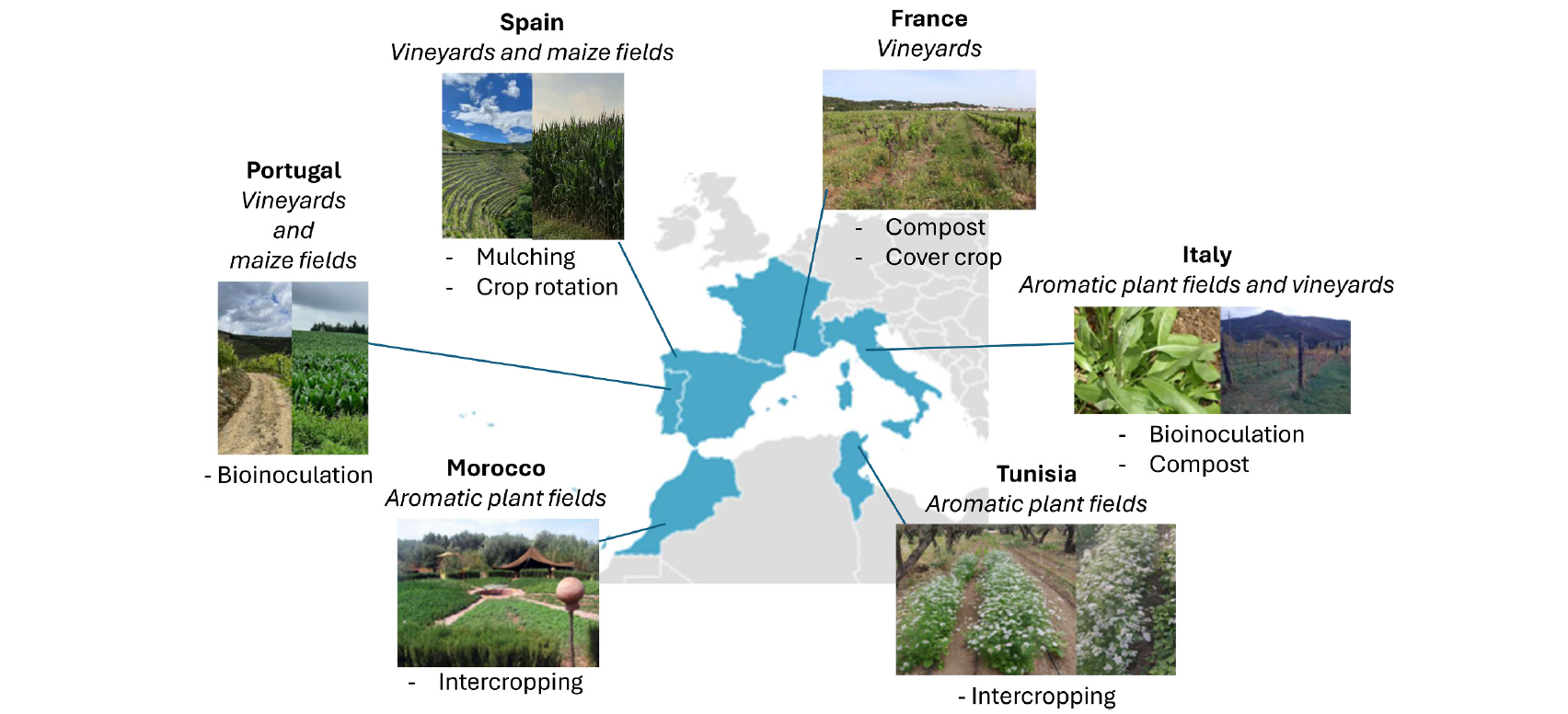
Read more: Multitargeted metabarcoding and morphological identification reveal practice-specific soil biodiversity outcomes in Mediterranean cropping systemsMeeting future food demands while preserving ecosystem integrity requires agricultural systems that sustain soil biodiversity. Despite its critical role in regulating soil fertility, crop resilience, and food production, the response of soil biodiversity to sustainable agricultural practices remains poorly understood, particularly across multiple groups of organisms. Here, we evaluated the effects of organic amendments, cropping pattern diversification, and microbial inoculation on soil biodiversity using 23 treatment-control pairs from 11 case studies across six Mediterranean countries and three different cropping systems. We employed an integrative methodology combining multitargeted DNA metabarcoding (16S rRNA, ITS, 18S rRNA, COI, Oligo01) and morphological identification (Macfadyen extractor and pitfall traps) to study the structural and functional diversity of soil microorganisms, microfauna, microarthropods, and macrofauna. Data from molecular methods differed between primers and from morphological data; specifically, 18S rRNA and COI yielded markedly different diversity estimates, and both underperformed morphological identification for soil fauna resolution, indicating the need for primer standardisation, increased soil input mass and methodological complementarity between molecular and morphological approaches. Overall, our results show that compost addition positively influenced prokaryotic chemoheterotrophs, epigeic Collembola, spider richness, and total macrofauna abundance, with mulching eliciting broader positive responses. Cropping pattern diversification (i.e., rotations, cover crops, intercropping) more frequently enhanced than reduced soil biodiversity metrics, with 32% of effect sizes being moderately positive compared to 24% moderately negative. Microbial inoculations had limited influence on biodiversity, consistent with their intended role of enhancing specific functions while minimising disruption to resident communities. Although positive responses to sustainable agricultural practices were more frequent than negative ones, effects were often not statistically significant and were taxon- and context-dependent, highlighting the importance of site-specific assessments.